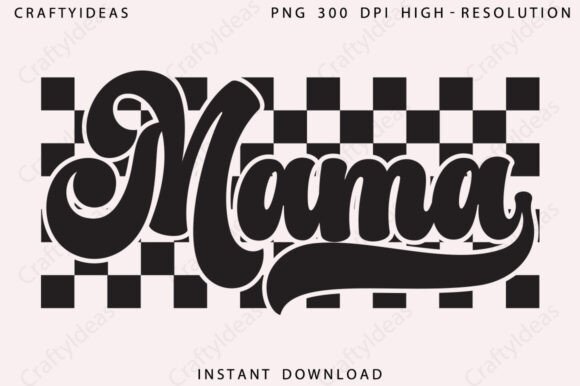
Retro Checkered Mama SVG: An Embroidery Review
As a professional embroidery designer and product reviewer, I approach every new digital asset with a critical eye. When evaluating the Retro Checkered Mama Svg, Mama Png, my first thought isn't just about how cute it looks on a screen, but how it will translate into physical thread on fabric. This design captures a specific nostalgic mood that is currently dominating the handmade market, blending vintage aesthetics with modern motherhood themes. However, moving from a vector graphic to a stitched reality requires careful consideration of structure, density, and application. Here is my practical assessment of using this design for real-world embroidery projects and commercial products.
Translating Retro Aesthetics to Stitch
The visual personality of the Retro Checkered Mama Svg, Mama Png is undeniably strong. It evokes a warm, playful, yet polished vibe that resonates deeply with millennial mothers and Gen Z crafters. From a design perspective, the checkered pattern offers excellent opportunities for texture, but it also presents technical challenges. In a digital format like SVG or PNG, lines are crisp and infinite. In embroidery, those same lines must be rendered through satin stitch, fill stitch, or running stitch.
When reviewing this graphics file for needlework, I look at the complexity of the checkerboard. If the squares are too small, they risk becoming a muddy mess of thread breaks and puckering. Ideally, this design should be digitized with distinct blocks that allow for clean color changes. The retro font typically associated with this style usually features curved serifs or bubbly shapes, which are generally forgiving in embroidery compared to sharp, thin script. As an applique design, this artwork shines because the checkered background can be created with fabric rather than thousands of stitches, reducing density while maintaining high visual impact.
Real-World Application: The Custom Sweatshirt Test
To truly judge the viability of this machine embroidery design, I mentally simulate a specific client project: a custom embroidered sweatshirt for a boutique "Mom Life" collection. Sweatshirts are the quintessential canvas for this aesthetic, but fleece and French terry fabrics are unforgiving. They have pile and stretch, both of which can distort detailed graphics.
In this scenario, the Retro Checkered Mama Svg, Mama Png serves as the centerpiece. For a sweatshirt, I would avoid a full-density fill stitch for the checkers. Instead, I would utilize the SVG vector paths to create a guide for fabric applique or a light running stitch grid over a contrasting fabric base. This reduces the stitch count significantly, preventing the garment from becoming stiff or bulletproof. The "Mama" lettering needs to be bold enough to stand out against the textured fleece. If the digital file provides clean, separate layers for the text and the background pattern, it allows me to adjust the spacing specifically for the loft of the sweatshirt material. This adaptability is what separates a generic download from a professional-grade embroidery file.
Navigating Fabric Limitations and Hoop Sizes
While this design is versatile, it demands respect for material limitations. Not every substrate is suitable for retro graphics. I advise extreme caution when applying this design to thin, stretchy knits like baby onesies or lightweight jersey tees without proper stabilization. The geometric nature of checkered patterns makes any distortion immediately obvious; if the fabric pulls, the squares become trapezoids, ruining the retro illusion.
Furthermore, consider your hoop size and placement. On a structured item like a tote bag or an apron, the design has ample room to breathe. However, on curved surfaces like caps or sleeves, the horizontal lines of the checkerboard can wrap awkwardly. For caps, I would recommend isolating the "Mama" text element from the Retro Checkered Mama Svg, Mama Png package and placing the checkered motif only on flat areas or using it as a smaller accent patch. Always verify the dimensions of the vector file against your machine’s maximum embroidery area before committing to a production run. Scaling a raster-based PNG up for a large back-of-hoodie print is different from scaling vectors for stitch; ensure you are working with the appropriate file type for your intended output.
Commercial Viability for Etsy Sellers and Makers
For the creative entrepreneur, the value of this design lies in its marketability. The "Retro Mama" niche is saturated, so execution is everything. Using this digital embroidery file effectively can elevate your shop's perceived quality. Customers trust sellers who demonstrate mastery over their medium. A well-executed version of this design on a personalized gift suggests attention to detail, whereas a poorly digitized version with thread breaks and registration errors signals amateurism.
This asset is particularly valuable for creating cohesive brand assets. You can use the PNG version for printable mockups and social media previews, ensuring your marketing matches your finished product. For Etsy sellers offering custom apparel, having a reliable, tested version of this design means faster turnaround times and fewer remakes. Just remember to confirm the licensing terms included with your download. While you may own the file, commercial rights for selling finished embroidered goods versus selling the digital file itself vary by creator. Protect your business by understanding these boundaries before listing items derived from this tote bag design or sweatshirt graphic.
Essential Designer Notes for Success
Before loading this design into your machine for a final product, adhere to these professional best practices:
- Test on Scrap Fabric First: Never stitch directly onto a sellable item without a test run. Use a scrap of the exact fabric and stabilizer combination you plan to use for the final piece.
- Evaluate Stabilizer Needs: Retro checkers require stability. For stretchy fabrics, use a cut-away stabilizer to prevent the geometric lines from warping during washing. For woven fabrics like tea towels, a tear-away may suffice.
- Check Thread Color Contrast: The retro aesthetic relies on specific color palettes (often muted greens, pinks, or browns). Test your thread colors against the fabric to ensure the checkered pattern remains distinct and doesn't blend into the background.
- Inspect Small Details: If the design includes tiny decorative elements or thin borders, verify they are wide enough for your needle and thread weight. Elements under 1mm may need to be removed or thickened in digitizing software.
- Mockup Verification: Use the provided PNG to create black-and-white mockups. This helps you see the value contrast without being distracted by color, ensuring the design reads clearly from a distance.
- Wash Testing: If creating baby embroidery or kitchen linens, wash and dry your test swatch. Retro designs can shrink unevenly if stitch density is too high relative to the fabric weight.
Final Thoughts on Design Integrity
The Retro Checkered Mama Svg, Mama Png is more than just a trendy graphic; it is a potential staple for any maker focusing on maternal or lifestyle crafts. Its success in embroidery depends entirely on the user's willingness to adapt the digital art to the physical constraints of thread and textile. By treating this file as a blueprint rather than a finished instruction, and by respecting the technical requirements of stitch density and fabric behavior, you can transform this vector art into a high-value handmade product. Whether you are crafting a holiday gift, stocking a boutique, or fulfilling custom orders, let practical judgment guide your needle. The result will be a product that feels as good as it looks, building lasting trust with your customers and pride in your craftsmanship.